Cameron Keller · 5 November 2026
Microclimates on Onyx Ridge Attract Botanists Studying Plant Resilience
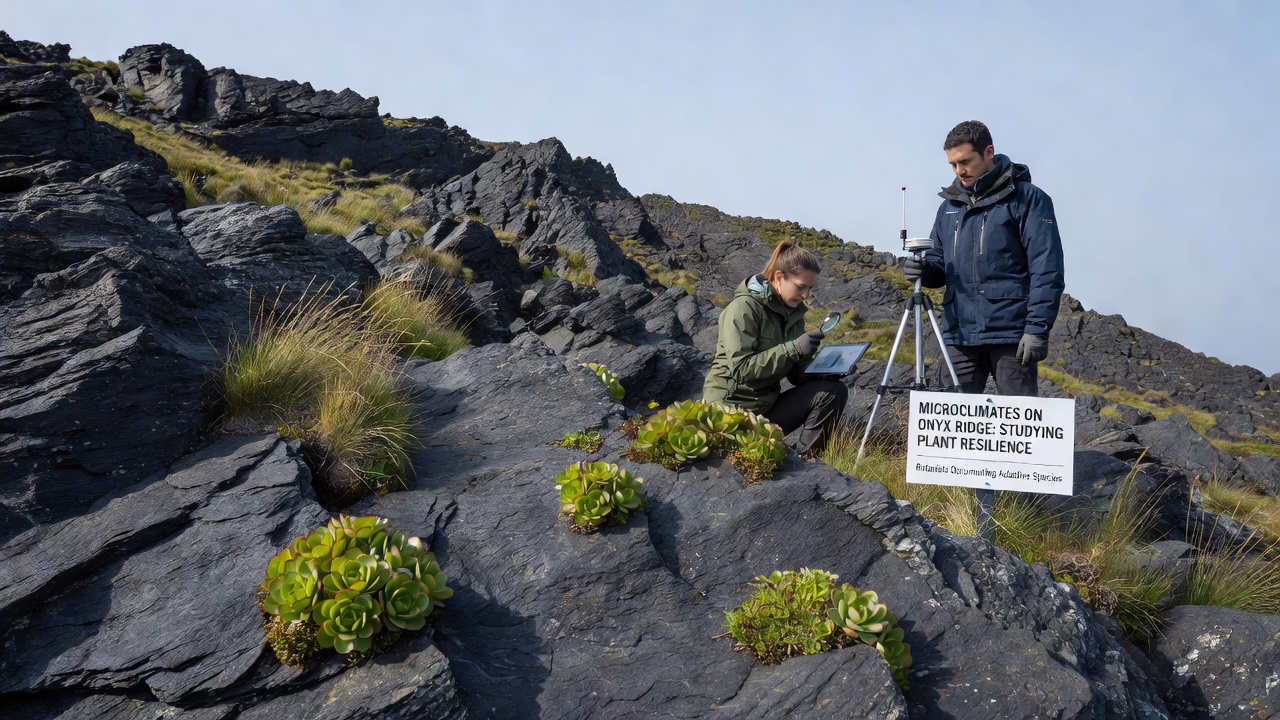
Botanists have turned their attention to Onyx Ridge where distinct microclimates create pockets of varying temperature, moisture and light that support unusual plant adaptations, and researchers from multiple institutions continue to document how these localized conditions foster resilience in species facing broader environmental shifts. The ridge's topography channels wind through narrow valleys while south-facing slopes receive extended sunlight compared to shaded northern exposures, and this variation produces measurable differences in soil moisture retention and temperature gradients across short distances.
Formation of Microclimates Across the Ridge
Elevation changes along Onyx Ridge range from lower basal areas near 1,200 meters to peaks exceeding 2,400 meters, and these height differences interact with prevailing winds to generate cooler, moister zones in sheltered gullies while exposed ridges experience faster evaporation and greater temperature swings. Data collected by field teams show that certain cliff faces maintain humidity levels 15 to 20 percent higher than adjacent open slopes because of reduced air circulation, and such conditions allow mosses and ferns to persist in locations where surrounding areas remain arid. Researchers note that rock outcrops absorb daytime heat and release it slowly overnight, creating thermal buffers that protect nearby vegetation from frost events common at higher altitudes.
Plant Species Exhibiting Resilience Traits
Surveys have identified drought-tolerant shrubs such as various species of manzanita and ceanothus that maintain photosynthetic activity during extended dry periods thanks to deep root systems reaching groundwater pockets created by the ridge's fractured geology. Grasses adapted to the microclimates display altered leaf structures that minimize water loss, while certain wildflowers complete their life cycles in narrow time windows when moisture from snowmelt or fog condensation becomes available. Botanists have recorded instances where individual plants on shaded ledges produce seeds with higher germination rates under cooler conditions compared to populations on sun-exposed terrain, and these variations provide material for studies on genetic diversity within single species.
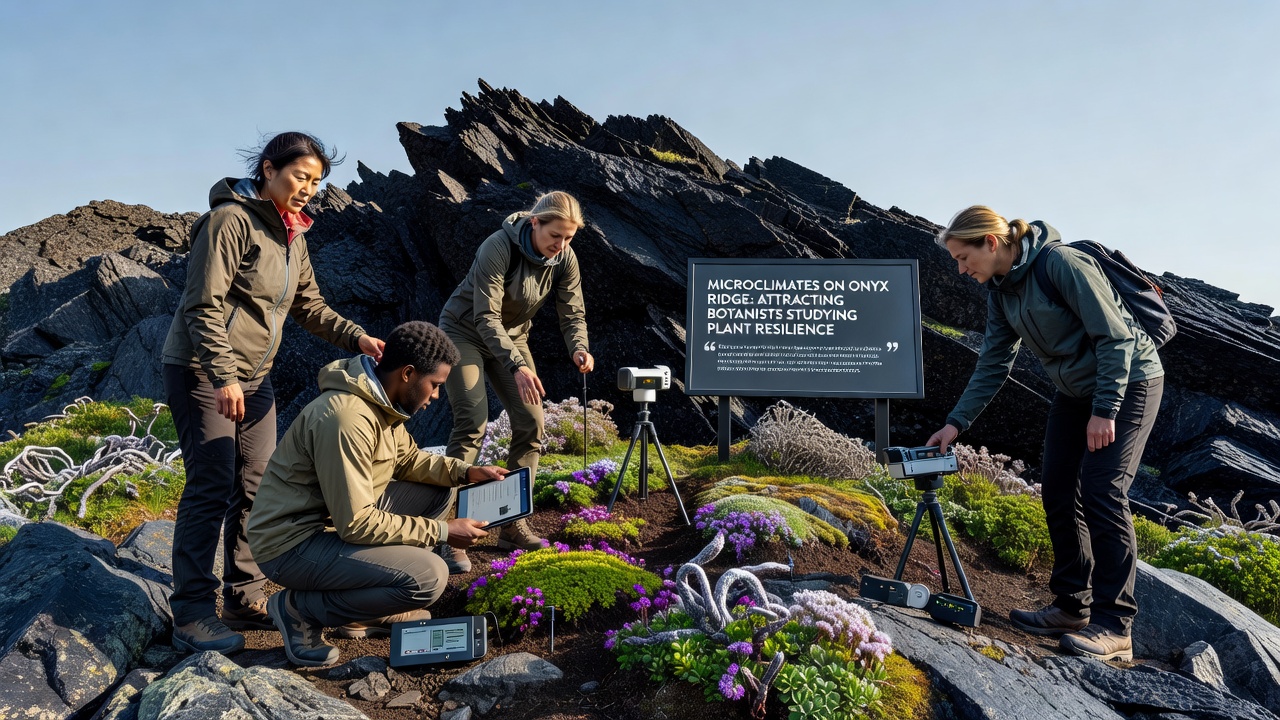
Observations from long-term plots established in 2023 indicate that some lichen communities on north-facing cliffs expand at rates nearly double those recorded on warmer southern exposures, and this growth differential correlates with consistent moisture availability rather than temperature alone. Teams have also documented how certain pine stands at mid-elevations exhibit slower needle turnover in areas where fog drip supplements rainfall, creating measurable differences in canopy density compared to drier sections of the same elevation band.
Research Methods and Data Collection Efforts
Scientists deploy arrays of micro-sensors that log temperature and humidity at 15-minute intervals across dozens of sites, and the resulting datasets reveal daily fluctuations exceeding 12 degrees Celsius between nearby locations separated by only 50 meters of horizontal distance. Soil samples collected seasonally undergo analysis for nutrient content and microbial activity, while drone-based multispectral imaging maps vegetation health patterns that align closely with the identified microclimate boundaries. Collaborative projects with institutions in Canada and Australia have introduced standardized protocols for measuring plant water potential, allowing direct comparisons between Onyx Ridge findings and similar ridge systems on other continents.
Studies scheduled to intensify in November 2026 will incorporate portable gas exchange equipment to quantify carbon assimilation rates under varying light and moisture regimes, and preliminary planning documents indicate that researchers will expand sampling to include nocturnal measurements when radiative cooling effects become most pronounced in the valleys.
Connections to Broader Ecological Patterns
Findings from Onyx Ridge contribute to regional understanding of how topography influences species distribution, and records show that several plants once considered rare have established stable populations within the protected microclimates where competition from invasive species remains low. Monitoring programs track seedling establishment success rates, and data indicate that germination occurs most reliably in areas where daily temperature variation stays within a narrow range rather than in uniformly cool or warm zones. Botanists have shared these patterns through presentations at conferences hosted by organizations such as the Australian Department of Climate Change, Energy, the Environment and Water, where similar topographic effects have been noted in other mountain ranges.
Future Monitoring and November 2026 Developments
Plans call for installation of additional weather stations along the ridge spine before the end of 2025, and these instruments will feed real-time data into models that predict how microclimate stability might change under shifting precipitation regimes. In November 2026 a multi-institution expedition will revisit permanent plots to assess cumulative growth responses over a three-year period, with particular attention to how extreme weather events recorded during the intervening seasons affected different microclimate zones. Equipment upgrades will include automated cameras that capture phenological stages, allowing continuous tracking without increased field visits.
Conclusion
Documentation of microclimates on Onyx Ridge continues to supply detailed information on plant responses to localized environmental conditions, and ongoing measurements through 2026 will extend the temporal scope of existing datasets. The combination of topographic complexity and consistent monitoring provides a framework that other research groups can adapt when examining resilience mechanisms in comparable landscapes.